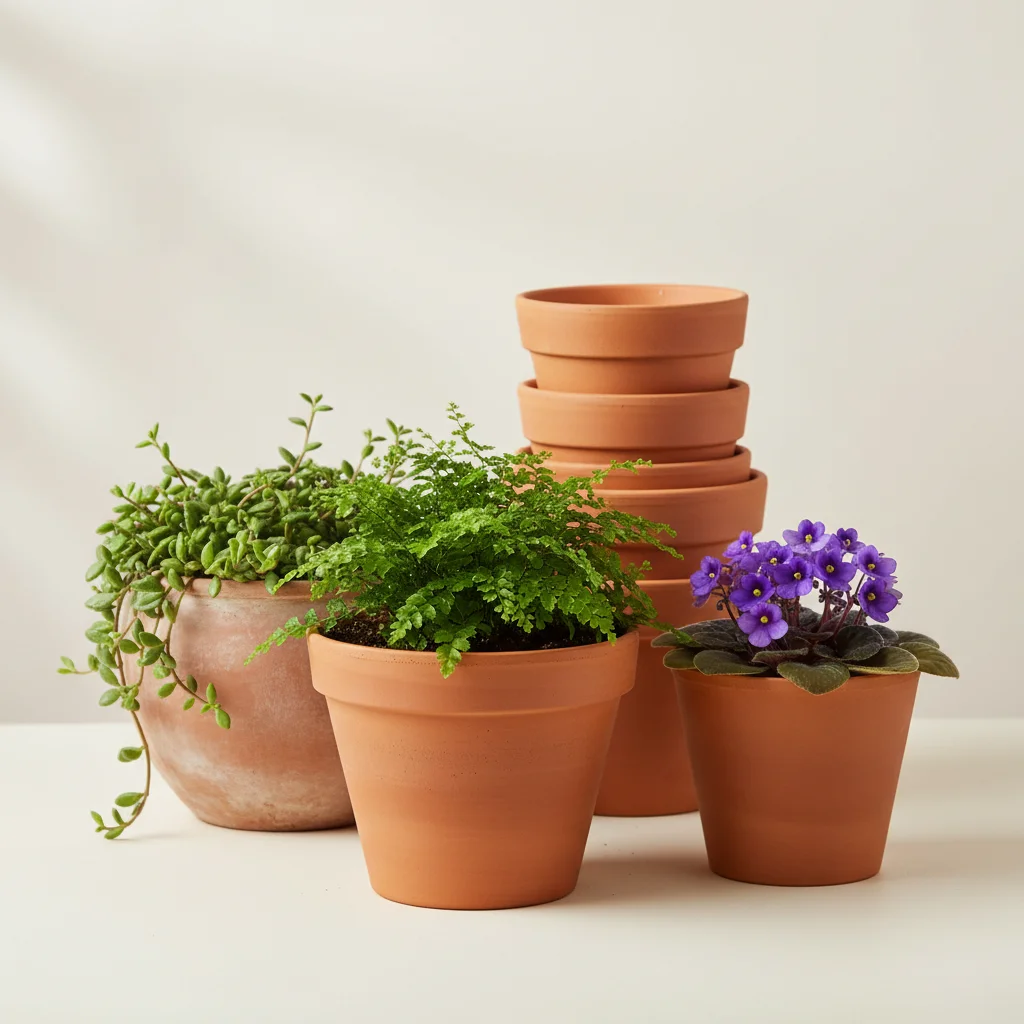
Terracotta plant pots offer five essential benefits that contribute significantly to plant health and growth. These traditional, unglazed clay pots are renowned for their porous nature, which allows for excellent air circulation and moisture regulation, preventing common issues like root rot. Their natural material also provides a stable environment, insulating roots from extreme temperature fluctuations and promoting a robust root system.
Understanding the Porosity of Terracotta
The most defining characteristic of terracotta is its porosity. Unlike plastic or glazed ceramic pots, terracotta allows both water and air to pass through its walls. This constant exchange is crucial for plant roots, which require oxygen to thrive and absorb nutrients. The porous nature helps to prevent waterlogging, a common killer of houseplants, by allowing excess moisture to evaporate from the sides of the pot. This natural wicking action means the soil dries out more evenly, reducing the risk of fungal diseases and promoting healthier root development.
However, this porosity also means that plants in terracotta pots may require more frequent watering, especially in hot or dry climates. It’s a trade-off that many gardeners find worthwhile for the overall health benefits it provides. For plants that prefer consistently moist soil, a terracotta pot might not be the ideal choice unless a diligent watering schedule is maintained.
Temperature Regulation and Root Protection
Terracotta pots act as natural insulators, protecting plant roots from drastic temperature changes. In hot weather, the evaporation of water from the pot’s surface creates a cooling effect, much like sweating. This keeps the soil temperature lower and more stable, preventing roots from overheating. Conversely, in cooler conditions, the thick walls of terracotta can offer a degree of insulation against the cold, though they are not frost-proof and can crack if water inside freezes and expands.
This thermal stability is particularly beneficial for plants sensitive to temperature fluctuations, such as many tropical varieties. A consistent root zone temperature helps reduce stress on the plant, allowing it to focus its energy on growth and flowering rather than struggling to adapt to environmental shifts.
Promoting Healthy Root Development
|
Our Picks for the Best Plant Pot in 2026
As an Amazon Associate I earn from qualifying purchases.
|
||
| Num | Product | Action |
|---|---|---|
| 1 | Indoor Self Watering Planters with Drainage Holes and Saucers, 8, 7, 6.5, 6, 5.5, 5 Inches, 6 Pots(Green+Brown |

|
| 2 | Kante 18 Inch Dia Round Concrete Planter, Indoor Outdoor Large Plant Pot with Drainage Hole and Rubber Plug for Home Patio Garden, Weathered Concrete |
|
| 3 | Indoor Self Watering Planters with Drainage Holes and Saucers, 8, 7, 6.5, 6, 5.5, 5 Inches, Green, 6 Pots. |
|
| 4 | Indoor Self Watering Planters with Drainage Holes and Saucers, 8, 7, 6.5, 6, 5.5, 5 Inches, White, 6 Pots |
|
| 5 | Kante 18 Inch Diameter Round Concrete Planter, Indoor Outdoor Large Plant Pot with Drainage Hole and Rubber Plug for Home Patio Garden, Buff Concrete |
|
| 6 | 7 pcs Plant Pots with Drainage Holes and Saucers, Indoor Planters, Set of 7 (7.5, 7, 6.5, 6, 5.5, 4.5, 3.5 Inches), White |
|
| 7 | Indoor Self Watering Planters with Drainage Holes and Saucers, 8, 7, 6.5, 6, 5.5, 5 Inches, Black, 6 Pots |
|
| 8 | Kante 18 Inch Dia Round Concrete Planter, Indoor Outdoor Large Plant Pot with Drainage Hole and Rubber Plug for Home Patio Garden, Black |
|
| 9 | Kante 18 Inch Dia Round Concrete Planter, Indoor Outdoor Large Plant Pot with Drainage Hole and Rubber Plug for Home Patio Garden, Charcoal |
|
| 10 | Indoor Outdoor Plant Pots- Self Watering Planters with Drainage Holes and Saucers, 9,8, 7.5 Inches, 3 Pots (Snow) |
|
The combination of excellent drainage and aeration in terracotta pots creates an ideal environment for root development. Roots are less likely to become waterlogged or oxygen-deprived, which encourages them to spread out and establish a strong, healthy network. This robust root system is fundamental for the plant’s ability to absorb water and nutrients efficiently, leading to more vigorous top growth and overall plant vitality.
Furthermore, the slight drying out between waterings that terracotta facilitates can encourage roots to grow towards the moisture, exploring the entire soil volume. This natural process helps prevent roots from circling at the bottom of the pot, a common issue in non-porous containers that can lead to root-bound plants.
- Improved air circulation to roots
- Natural moisture wicking prevents waterlogging
- Insulates roots from temperature extremes
- Promotes stronger, healthier root systems
- Adds a classic, earthy aesthetic to any space
Aesthetic Appeal and Versatility
Beyond their functional benefits, terracotta pots offer a timeless and classic aesthetic that complements a wide variety of plants and decor styles. Their warm, earthy tones provide a natural backdrop that allows the vibrant colors of foliage and flowers to stand out. They are incredibly versatile, suitable for both indoor and outdoor use, and can be found in a vast array of shapes, sizes, and designs, from simple utilitarian pots to intricately decorated planters.
The natural patina that develops on terracotta over time, often a white or green mineral deposit, is considered by many to be part of its charm, adding character and a sense of age to the pot. This makes them a popular choice for gardeners seeking a rustic or traditional look for their plant displays.
Environmental Friendliness and Durability
Terracotta pots are made from natural clay, making them an environmentally friendly choice. They are biodegradable and, if broken, can be recycled or composted back into the earth. This contrasts sharply with plastic pots, which contribute to plastic waste. While terracotta pots can be fragile and prone to breaking if dropped, with proper care, they can last for many years, even decades.
Their durability, when handled correctly, makes them a sustainable option for long-term gardening. Choosing terracotta supports a more eco-conscious approach to plant care, aligning with broader efforts to reduce environmental impact.
Get our weekly buyer guide
Practical specs, not advice. Unsubscribe anytime.
